
Yes. Anxiety and depression can increase the risk of relapse. They do not make relapse inevitable, but untreated or poorly managed mental health symptoms are one of the most common reasons people return to substance use after a period of sobriety.
For many people, substances once served as a way to quiet anxious thoughts, lift low mood, or create temporary emotional relief. When those feelings return without a new way to manage them, the brain often reaches for the familiar solution. That is why recovery needs to address more than abstinence alone.
This is especially important in early recovery, when emotional intensity can rise just as the old coping method is removed. People may feel confused by the gap between being sober and still feeling unstable. That gap is common, and it is clinically meaningful.
This article explains how anxiety and depression connect to relapse risk, why symptoms can become more noticeable after getting sober, what dual diagnosis means, and how integrated treatment can reduce the chance of returning to substance use.
Why Mental Health Symptoms Can Become More Noticeable in Recovery
Many people expect sobriety to feel better right away. Sometimes it does. Often it does not, at least not immediately.
Substances can temporarily mute emotional pain. When they are removed, anxiety, depression, restlessness, irritability, or emptiness may become clearer. In some cases, these symptoms were present before the addiction. In others, they developed or intensified through substance use, withdrawal, and the stress of early recovery.
This increase in emotional intensity can surprise people who assumed that stopping use would automatically improve their mental health. Instead, early recovery often reveals what the substance was helping the person avoid or manage.
That does not mean recovery is failing. It often means the next layer of work is becoming visible. The nervous system is adjusting. Old emotional patterns are no longer being chemically dampened. Daily life stressors are still present. Under those conditions, anxiety and depression can feel louder before they feel more manageable.
Understanding this pattern helps reduce shame. Feeling worse emotionally after getting sober is not proof that sobriety was a mistake. It is often a sign that deeper support is needed.
The Connection Between Addiction and Mental Health
Addiction and mental health symptoms frequently influence each other. This relationship can develop in more than one direction.
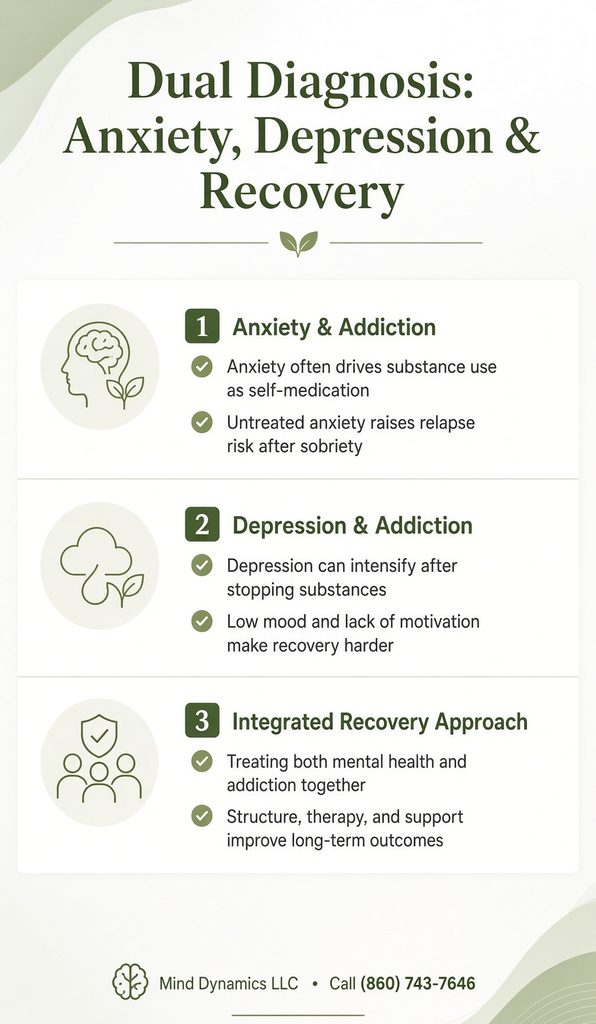
Some people begin using substances to cope with anxiety, depression, trauma, or stress. The substance provides short-term relief, which reinforces the pattern. Over time, the brain learns to associate emotional discomfort with the need to use.
Other people develop anxiety or depression as a result of ongoing substance use, withdrawal cycles, sleep disruption, relationship damage, or the biological effects of the substances themselves.
In both cases, the result is similar. Mental health symptoms and substance use begin to reinforce each other. When one remains untreated, the other becomes harder to stabilize.
This is one reason people can stay sober for a period of time and still feel vulnerable. Sobriety removes the substance. It does not automatically resolve the emotional patterns that made the substance feel necessary.
Cravings are not only about the substance. They are often about relief. If anxiety or depression is the pressure point, the substance can start to look like the fastest available answer unless better tools are in place.
If this pattern feels familiar, you may also find it helpful to read about why people relapse after detox.
What Is Dual Diagnosis?
Dual diagnosis, also called co-occurring disorders, means a person is dealing with both a substance use disorder and a mental health condition at the same time. Common combinations include addiction with anxiety, depression, trauma-related symptoms, or other behavioral health concerns.
The important clinical point is not the label itself. The important point is that both conditions need attention. Treating only the substance use while ignoring anxiety or depression often leaves a major relapse driver in place. Treating only the mental health symptoms while substance use continues can also limit progress.
Integrated care means both issues are addressed together rather than in isolation. That approach is generally more effective than handling them as completely separate problems.
This does not mean every person with low mood in recovery has a complex dual diagnosis. It does mean that when anxiety or depression is clearly tied to cravings, relapse patterns, or daily instability, both sides of the problem deserve structured attention.
Signs You May Need Treatment for Both
Not every person with anxiety or low mood in recovery needs the same level of care. Still, certain patterns suggest that mental health symptoms and substance use are closely connected.
Signs may include:
– Using substances mainly to calm anxiety, sleep, or lift mood
– Strong cravings during periods of stress, panic, or depression
– Feeling emotionally worse after getting sober rather than better
– Repeated relapse during anxiety spikes or depressive episodes
– Difficulty using coping skills when emotional symptoms intensify
– Ongoing sleep problems, restlessness, or emotional numbness
– A sense that sobriety alone has not made daily life manageable
These signs do not automatically mean someone needs residential treatment. They do suggest that recovery support should include more than abstinence-focused work alone.
Families often notice the pattern before the person fully names it. A loved one may stay sober for a stretch, then become increasingly anxious, withdrawn, irritable, or hopeless, and then return to use. That sequence is one of the clearest indicators that emotional symptoms are part of the relapse risk.
For many people, this is also where emotional healing after addiction becomes relevant.
How Dual Diagnosis Treatment Works
Effective dual diagnosis treatment addresses substance use and mental health symptoms in a coordinated way. That may include therapy for emotional regulation, support for cravings and relapse prevention, medication management when appropriate, and practical skill building for stress and daily functioning.
The goal is not simply to stop using. The goal is to reduce the emotional pressure that makes substance use feel like the fastest form of relief.
This often involves helping people:
– Recognize emotional triggers earlier
– Develop non-substance coping strategies
– Understand the connection between mood, stress, and cravings
– Build more stable routines
– Address relationship and family patterns that increase stress
– Receive support for both recovery and mental health at the same time
When these pieces are handled together, relapse risk often becomes more manageable because the person is no longer relying on willpower alone during emotionally difficult moments.
Treatment is also more effective when it respects the fact that anxiety and depression are not moral failures. They are clinical issues that can respond to structured support, skill development, and, when appropriate, medical care.
How PHP and IOP Can Address Co-Occurring Needs
Outpatient levels of care can be especially useful when anxiety or depression is part of the relapse picture, because they provide structure without removing the person from daily life entirely.
Intensive Outpatient Programming can help people build coping skills, process emotional patterns, and stay accountable while continuing work or family responsibilities. This level of care is often appropriate when symptoms are significant but the person can still function between sessions.
You can learn more about this option on our Intensive Outpatient Program in Connecticut page.
Partial Hospitalization provides a higher level of daily structure. It may be more appropriate when anxiety, depression, or relapse risk is intense enough that denser support is needed. PHP can create more stability before a person steps down into IOP or less intensive care.
Our Partial Hospitalization Program in Connecticut page explains when that higher structure may be recommended.
The right level of care depends on symptom intensity, safety, support system, and how much structure the person currently needs to stay stable. Some people begin with more structure and step down as emotional stability improves. Others start in IOP because their symptoms and support system already make that level workable.
When to Seek Professional Help
It is reasonable to seek professional support when anxiety or depression is interfering with recovery, daily functioning, or emotional stability. Waiting until relapse has already occurred is not the only option.
It may be time to reach out if:
– Emotional symptoms are intensifying rather than settling
– Cravings are becoming more frequent during anxious or low-mood periods
– Sleep, concentration, or daily functioning are deteriorating
– The person feels unable to cope without substances
– Previous attempts at sobriety have repeatedly broken down under emotional stress
Getting help earlier can reduce the chance that untreated mental health symptoms become the reason recovery unravels. It can also prevent the familiar cycle in which a person gets sober, feels worse emotionally, and concludes that sobriety itself is the problem.
Support for Anxiety, Depression, and Addiction in Connecticut
Many people across Connecticut experience the overlap between mental health symptoms and substance use. Families often see a loved one get sober and then struggle with anxiety, depression, or emotional instability that no one fully expected.
Mind Dynamics is based in Plainville and works with individuals and families from Hartford, Bristol, Farmington, New Britain, West Hartford, Southington, and surrounding Central Connecticut communities. For people dealing with co-occurring concerns, outpatient treatment can provide structured support while remaining connected to daily life.
You can explore broader treatment options on our Addiction Treatment in Connecticut page.
If you are unsure whether anxiety or depression is increasing relapse risk for you or someone you care about, a clinical conversation can help clarify the next step.
You can call us at (860) 743-7646.
Frequently Asked Questions
Can anxiety cause relapse after getting sober?
Yes. Anxiety can increase relapse risk, especially when substances previously helped the person manage worry, panic, or tension.
Can depression lead to relapse?
Yes. Depression can reduce motivation, increase emotional pain, and make substance use feel like a form of relief if healthier supports are not in place.
Why do I feel more anxious after quitting alcohol or drugs?
Substances may have temporarily muted anxiety. Once they are removed, symptoms can become more noticeable while the brain and nervous system adjust.
What is dual diagnosis?
Dual diagnosis means a person is dealing with both a substance use disorder and a mental health condition at the same time.
Does dual diagnosis treatment work better than treating addiction alone?
In many cases, yes. Addressing both conditions together is generally more effective than treating only one while leaving the other active.
Can IOP help with anxiety and addiction together?
Yes. IOP can provide structured support for both substance use and emotional symptoms while allowing people to remain in daily life.
When is PHP more appropriate?
PHP may be more appropriate when symptoms are intense, relapse risk is high, or the person needs more daily structure than IOP can provide.
Is relapse inevitable if I have anxiety or depression?
No. These conditions increase risk, but integrated support and stronger coping skills can significantly improve stability.
Should families be involved when mental health and addiction overlap?
Often yes. Family stress and communication patterns can intensify anxiety and depression, and family support can also strengthen recovery when handled thoughtfully.
Taking the Next Step
Anxiety and depression can increase relapse risk, especially when they remain untreated in recovery. That does not mean recovery is impossible. It means the emotional side of the process needs attention alongside sobriety.
If you or someone you care about is sober but still struggling with anxiety, depression, or emotional instability, support is available. You do not have to wait for relapse to take the next step.
Call Mind Dynamics at (860) 743-7646.