
Why Healing Together Leads to Lasting Sobriety
Addiction Recovery in Connecticut
Addiction is often called a family disease, and for good reason. When one person struggles with substance use, the effects ripple through every relationship in their life. Spouses, parents, children, and siblings all feel the impact, and in many cases, they develop their own unhealthy coping patterns just to survive the chaos.
In 2026, more treatment centers in Connecticut are recognizing that lasting recovery is nearly impossible without addressing the family system. This is why family therapy has become a central part of modern addiction treatment programs, including at Mind Dynamics LLC in Plainville.
In this guide, we will explore how family therapy transforms addiction recovery, what it actually looks like in practice, and why involving your loved ones can dramatically increase the chances of long term success.
Why Family Therapy Matters in Addiction Recovery
For decades, addiction treatment focused almost entirely on the individual. The thinking was: Fix the person, and everything else will fall into place. We now know this approach is incomplete.
Addiction changes how families communicate, set boundaries, and show love. Family members often develop enabling behaviors, codependency, or their own mental health struggles as a result. If these patterns are not addressed, the person in recovery often returns to an environment that unconsciously supports the old behaviors.
Family therapy changes this dynamic. It helps everyone understand addiction as a disease, improves communication, rebuilds trust, and creates a healthier home environment, one that actively supports recovery instead of accidentally undermining it.
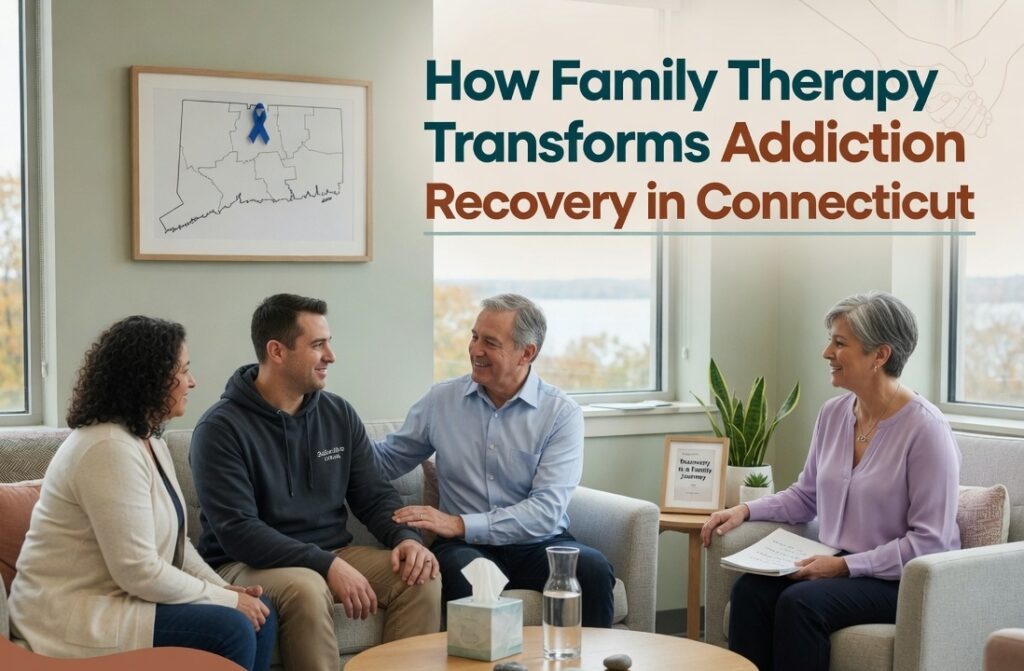
How Addiction Affects the Whole Family
Addiction rarely affects just one person. Here are some of the most common ways families are impacted:
Emotional Strain: Family members often experience anxiety, depression, anger, guilt, and shame. They may feel responsible for the persons addiction or believe they failed to prevent it.
Broken Trust: Lies, broken promises, and unpredictable behavior erode trust over time. Rebuilding this trust takes intentional effort from everyone involved.
Enabling Behaviors: Many families develop patterns of covering up, making excuses, or rescuing the person from consequences. While these actions come from love, they often prolong the addiction.
Role Changes: Children may take on adult responsibilities, or one parent may become the sole emotional and financial support. These shifts can create long lasting imbalances in the family system.
Isolation: Families often withdraw from friends and extended family out of shame or fear of judgment, which increases stress and reduces support.
Family therapy helps unpack these patterns in a safe, structured environment. It gives everyone a voice and creates space for healing that goes far beyond the individual in treatment.
What Family Therapy Looks Like at Mind Dynamics
At Mind Dynamics LLC, family therapy is not an afterthought, it is a core part of our treatment philosophy. We believe that when families heal together, recovery becomes stronger and more sustainable.
Here is what family involvement typically includes in our program:
Family Education Sessions: Loved ones learn about addiction as a brain disease, understand common behaviors, and discover how they can best support recovery without enabling.
Family Therapy Sessions: Guided conversations help repair damaged relationships, improve communication, and address unresolved conflicts in a healthy way.
Boundary Setting Workshops: Families learn how to set and maintain healthy boundaries, one of the most important skills for long term recovery.
Multi Family Groups: These groups allow families to connect with others going through similar experiences, reducing shame and building community.
Aftercare Planning for Families: We help families create a plan for ongoing support, including continued therapy, support groups, and resources for their own healing journey.
The Real Benefits of Family Therapy in Recovery
When families participate in therapy together, the results are often profound. Here are some of the most meaningful benefits we see at Mind Dynamics:
Higher Completion Rates: People whose families are involved in treatment are significantly more likely to complete the program and stay engaged in aftercare.
Lower Relapse Rates: A supportive home environment dramatically reduces the risk of returning to old patterns after treatment ends.
Improved Family Relationships: Many families report stronger bonds, better communication, and greater understanding after going through therapy together.
Healing for Everyone: Family therapy is not just about helping the person with addiction, it helps spouses, parents, and children heal from the trauma they have experienced as well.
Long Term Stability: Families who learn healthy coping skills together are better equipped to handle future challenges without falling back into old dynamics.
Individual Treatment vs Family Involved Treatment
Many people still believe that addiction treatment should focus only on the individual. While individual therapy is essential, research and real world outcomes show that family involvement makes a dramatic difference.
Programs that include family therapy consistently report better engagement, higher completion rates, and stronger long term sobriety. The reason is simple: recovery does not happen in a vacuum. When the whole family system changes, the environment becomes one that supports, rather than sabotages, lasting change.
Our Approach at Mind Dynamics
At Mind Dynamics, we do not treat addiction in isolation. We treat the whole person, and the whole family. Our Level 2 program is specifically designed around healthy relationships and family healing, because we have seen how powerful this work can be.
We combine evidence based family therapy approaches with compassion, respect, and a deep understanding of how addiction affects every member of the family. Whether you are a spouse, parent, sibling, or adult child, there is a place for you in the recovery process.
Frequently Asked Questions
Do I have to participate in family therapy if my loved one is in treatment?
Participation is always voluntary, but we strongly encourage it. Even attending a few sessions can make a meaningful difference in both your relationship and your loved ones recovery.
What if my family is resistant or does not believe in therapy?
This is very common. Many families feel anger, exhaustion, or skepticism after years of broken promises. Our team is experienced in working with resistant families and can help open the conversation in a gentle, non judgmental way.
Is family therapy only for spouses and parents?
No. Family therapy can include anyone who plays a significant role in the persons life, siblings, adult children, close friends, or chosen family. We work with whatever support system the individual has.
How long does family therapy last?
It varies. Some families do a few focused sessions during treatment, while others continue with ongoing family therapy as part of aftercare. We create a plan that fits each familys needs and goals.
Healing Is Possible, Together
Addiction takes a tremendous toll on families. But recovery can bring families closer than ever before. When everyone is willing to show up, do the work, and heal together, the results can be life changing.
At Mind Dynamics LLC, we believe that no one should have to recover alone, and no family should have to suffer in silence. Our doors are open to anyone who wants to be part of the healing process.
If you or someone you love is struggling with addiction and you are ready to explore family therapy as part of recovery, call us today at (860) 743-7646 or verify your insurance coverage online. We are here to help you take the first step, together.
Mind Dynamics LLC Plainville, Connecticut
(860) 743-7646 www.minddynamicsllc.com