
Veterans searching for addiction treatment in Connecticut often face an important decision about which level of care is right for them. Depending on their medical needs, they may choose inpatient rehab, outpatient detox, a Partial Hospitalization Program (PHP), or an Intensive Outpatient Program (IOP).
There is no single option that works best for everyone. For some veterans, inpatient care may provide the necessary round-the-clock structure. For others, outpatient treatment often allows them to stay connected to their daily life while receiving substance use treatment. Understanding the differences between these options helps veterans and their families make a more informed choice.
This guide compares inpatient rehab with Partial Hospitalization Programs (PHP), Intensive Outpatient Programs (IOP), and Ambulatory Withdrawal Management (outpatient detox) to help veterans understand which level of care best supports their recovery goals.
Key Takeaways
- Inpatient rehab is recommended for some veterans based on medical and clinical needs.
- PHP provides structured daytime treatment while allowing eligible individuals to return home.
- IOP offers flexibility for veterans balancing work, family, and recovery.
- Veterans may be able to access outpatient treatment through VA Community Care or TRICARE, depending on eligibility and authorization.
- A professional assessment helps determine the most appropriate level of care.
What Are the Different Levels of Care?
Addiction treatment is offered at different levels of care based on a person’s medical needs, withdrawal symptoms, mental health, and recovery goals. A clinical assessment helps determine which option is most appropriate.
What Is Inpatient Rehab?
Inpatient rehab, also called residential treatment, involves staying at a treatment facility full time. This environment provides continuous medical and clinical supervision for a Substance Use Disorder.
What Is Outpatient Detox (Ambulatory Withdrawal Management)?
Outpatient detox, also called Ambulatory Withdrawal Management, is a medically supervised program that helps eligible individuals manage withdrawal symptoms without staying overnight in a treatment facility. After a clinical assessment, some veterans may continue into a Partial Hospitalization Program (PHP) or an Intensive Outpatient Program (IOP) as part of their recovery plan.
What Is a Partial Hospitalization Program (PHP)?
A Partial Hospitalization Program (PHP) is a structured outpatient addiction treatment program that provides several hours of therapy each day while allowing individuals to return home in the evenings.
What Is an Intensive Outpatient Program (IOP)?
An Intensive Outpatient Program (IOP) is a flexible outpatient treatment option that provides therapy several days a week. This structure is designed to accommodate work, school, or family schedules.
Why Outpatient Treatment Matters for Veterans
Many veterans searching for addiction treatment in Connecticut consider outpatient programs because these options allow them to receive structured care while continuing to work, stay with family, and remain connected to their local community.
Veterans across Connecticut, including Plainville , Hartford , Bristol , Farmington, New Britain, Waterbury, Southington, Avon, and nearby communities, often choose outpatient treatment because it allows them to stay close to home while receiving care.
Some veterans may begin treatment with outpatient detox before transitioning into a PHP or IOP. Outpatient detox may be appropriate for individuals experiencing mild to moderate withdrawal who can be safely monitored without staying overnight. A clinical assessment helps determine whether this level of care is appropriate.
For a lot of veterans, staying connected to family is one of the biggest reasons they lean toward outpatient care. Being able to go home at the end of the day and sleep in their own bed can make recovery feel more manageable, especially when they have a spouse, children, or other family members who rely on them. Family support can play an important role in recovery, and involving loved ones may be appropriate depending on each person’s treatment plan.
Work is another major factor. Many veterans are in the middle of rebuilding their civilian career or are already working. Taking several weeks or months off for inpatient rehab is not always realistic. Outpatient programs, particularly Intensive Outpatient Programs, are often designed to work around job schedules so veterans can continue earning an income while getting help.
Privacy also plays a significant role. Outpatient treatment tends to be more discreet because veterans can keep up with their normal routine while attending clinical sessions during set hours.
For some veterans, outpatient programs may provide an appropriate level of support while allowing them to practice recovery skills in their everyday environment. Instead of learning coping strategies in a controlled setting and then returning to daily life later, outpatient treatment allows them to apply what they are learning while still dealing with normal triggers.
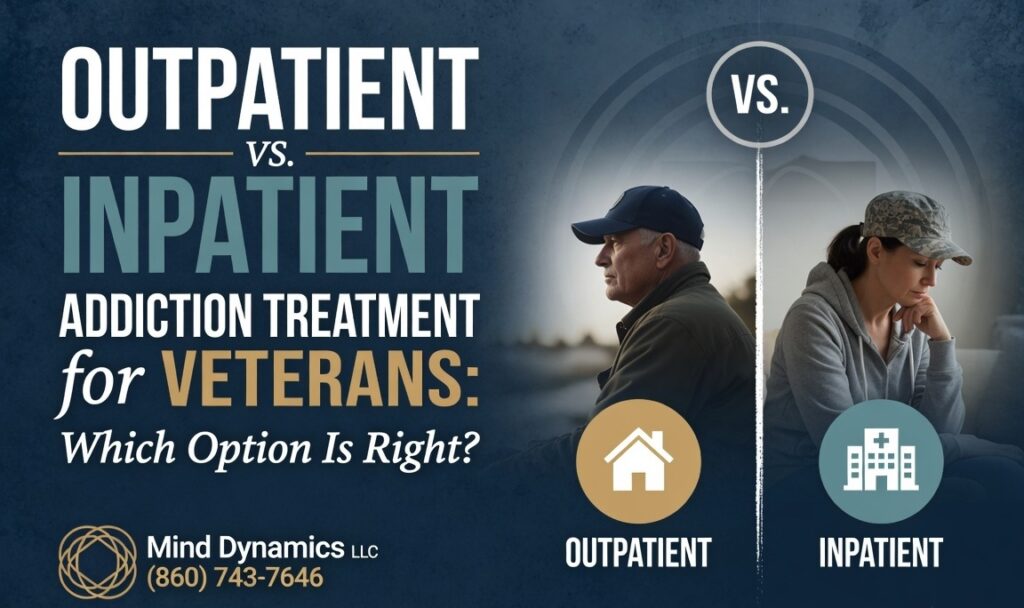
Understanding Inpatient Rehab
One of the biggest advantages of inpatient rehab is continuous medical supervision and structured clinical support. For veterans dealing with severe withdrawal symptoms or unstable medical conditions, having continuous care can be necessary for safety. Inpatient programs also remove individuals from their usual environment. This separation can help reduce immediate exposure to triggers.
Inpatient treatment typically includes individual therapy, group counseling, educational sessions, and medication management. Because veterans live at the facility, they follow a structured daily schedule with limited outside contact during the early phases of treatment. This setup can be helpful for those who need strong boundaries and focused time away from daily responsibilities.
Being away from home for an extended period can be difficult for veterans who have jobs, families, or other obligations. Some veterans also find the highly controlled environment of inpatient treatment hard to adjust to, especially if they are used to managing their own routines.
Inpatient rehab is not better or worse than outpatient treatment. It simply serves a different purpose and may be the right fit depending on a veteran’s clinical needs.
Understanding PHP (Partial Hospitalization Program)
PHP is more intensive than a standard Intensive Outpatient Program but less restrictive than inpatient rehab. It is often used as a step-down from inpatient care or as a primary level of treatment for veterans who need more support than IOP but do not require overnight supervision.
In a PHP, veterans usually participate in a combination of individual therapy, group counseling, psychoeducation, and skill-building sessions. The daily schedule is structured and focused on addressing both addiction and any co-occurring mental health issues, such as PTSD, anxiety, or depression. Mind Dynamics also offers PHP with Housing in Plainville, providing a stable living situation for those completing their daytime treatment.
One of the main benefits of PHP is that it offers a high level of clinical support while still allowing veterans to sleep at home and maintain a connection to their normal routine. This can be especially helpful for those who have stable housing and a supportive family environment but still need intensive clinical support during the day.
Understanding IOP (Intensive Outpatient Program)
IOP is generally less intensive than a Partial Hospitalization Program but more structured than standard outpatient counseling. It is often a good option for veterans who are medically stable, have a supportive home environment, and need regular recovery support while still being able to manage their regular responsibilities.
In an Intensive Outpatient Program, treatment usually includes a mix of individual counseling, group therapy, and educational sessions focused on addiction, relapse prevention, coping skills, and mental health.
One of the biggest advantages of IOP is the flexibility it offers. Because sessions are typically scheduled during the day or early evening, many veterans are able to continue working while receiving consistent treatment. It can also serve as a step-down level of care for those who have already completed a higher level of treatment.
Outpatient vs. Inpatient Comparison
When comparing treatment options, it helps to look at how inpatient rehab, Partial Hospitalization Programs, and Intensive Outpatient Programs differ in practical ways.
| Factor | Inpatient Rehab | PHP (Partial Hospitalization) | IOP (Intensive Outpatient) |
| Sleep at home | No | Yes | Yes |
| Ability to work | Usually not possible | Sometimes possible | Often possible |
| Family time | Limited | Yes | Yes |
| Medical supervision | Highest (24/7) | High | Moderate |
| Best for severe withdrawal | Yes | Selected cases | Usually not |
| Level of structure | Very high | High | Moderate to high |
| Flexibility | Low | Moderate | Higher |
| Daily time commitment | Full time (residential) | Several hours per day | Fewer hours per day |
| Insurance | May be covered by VA Community Care, TRICARE, or private insurance (depending on eligibility) | May be covered by VA Community Care, TRICARE, or private insurance (depending on eligibility) | May be covered by VA Community Care, TRICARE, or private insurance (depending on eligibility) |
Choosing between these options usually depends on a veteran’s clinical needs, home environment, and personal responsibilities. A professional assessment is the best way to determine which level of care is most appropriate.
Can Veterans Continue Working During Treatment?
One of the most common concerns veterans have when considering addiction treatment is whether they will be able to keep working. The answer usually depends on the level of care and the individual’s specific situation.
Inpatient rehab generally requires a full-time commitment, making it difficult to maintain regular employment. Partial Hospitalization Programs offer more flexibility but still require a significant daytime commitment. Depending on work schedules, some veterans in PHP may be able to work part-time.
Intensive Outpatient Programs are generally the most flexible option when it comes to employment. Many veterans in IOP are able to continue working while attending treatment, especially if their job allows some flexibility in scheduling. Discussing work responsibilities with the treatment team during the assessment process can help create a realistic plan.
PTSD and Co-Occurring Disorders in Veterans
Many veterans who struggle with addiction are also dealing with mental health care needs at the same time. Conditions such as PTSD, anxiety, depression, and other trauma-related issues are common among those who have served in the military. When a substance use disorder and a mental health condition occur together, it is often referred to as a dual diagnosis or co-occurring disorders.
According to the U.S. Department of Veterans Affairs and SAMHSA, substance use disorders and PTSD often occur together among veterans. Some veterans may use alcohol or drugs to cope with symptoms of PTSD or military-related stress.
Treating only the addiction without addressing underlying mental health issues can make long-term recovery more difficult. Effective treatment for veterans often involves addressing both addiction and mental health together. Outpatient programs can be especially useful for veterans with a dual diagnosis because they allow individuals to practice new coping skills in their actual environment while still receiving regular recovery support.
Accessing Care Through the VA Community Care Network
For many veterans in Connecticut, one of the biggest questions is how to access outpatient addiction treatment using their VA benefits. The VA Community Care Network makes this possible for eligible veterans.
If you are already connected with the VA Connecticut Healthcare System, the process usually starts by speaking with your VA provider or care coordinator. They can help determine whether you qualify for Community Care and assist with submitting a referral.
Mind Dynamics is a participating provider in the VA Community Care Network and offers a tiered continuum of outpatient addiction treatment programs, including PHP, IOP, and outpatient detox.
Frequently Asked Questions
- How do I know if outpatient treatment is right for me?
The best way to determine the appropriate level of care is through a comprehensive clinical assessment. Factors such as withdrawal symptoms, medical history, mental health needs, and your home environment all help determine whether outpatient treatment or inpatient rehab is recommended. - Does the VA Community Care Network cover outpatient detox?
Eligible veterans may be able to receive outpatient detox through the VA Community Care Network when it is medically appropriate and authorized by the VA. Coverage depends on individual eligibility and referral requirements. - Can veterans continue working while in outpatient treatment?
Yes, many veterans are able to keep working while attending an Intensive Outpatient Program (IOP). PHP usually requires more time during the day, so it can be harder to maintain full-time employment. - Does the VA cover outpatient addiction treatment?
Yes, the VA can cover outpatient treatment for eligible veterans. In many cases, veterans can access outpatient programs through the VA Community Care Network if they qualify for a referral. - Does TRICARE cover IOP or PHP?
TRICARE often covers Intensive Outpatient Programs and Partial Hospitalization Programs for eligible beneficiaries. Coverage can vary, so it is best to verify your specific benefits before starting treatment. - What is the difference between PHP and IOP?
A Partial Hospitalization Program (PHP) is more intensive and usually involves several hours of treatment per day, five to six days a week. An Intensive Outpatient Program (IOP) is less intensive and offers more flexibility, often allowing veterans to continue working or handling family responsibilities. - Can veterans receive outpatient detox?
Yes, some veterans can safely complete detox on an outpatient basis through Ambulatory Withdrawal Management, especially if their withdrawal symptoms are mild to moderate and they have a stable home environment. A medical assessment is required to determine if this is safe and appropriate.
Conclusion: Making the Right Choice for Your Recovery
Choosing between inpatient rehab and an outpatient program is not about finding the best option in general. It is about finding the clinical environment that best fits your current needs to help you build long term recovery.
Some veterans benefit from the structure and constant support of inpatient care, while others do well with the flexibility of outpatient treatment. Recovery is not a one-size-fits-all process. Many veterans move between different levels of care as their needs change.
If you are a veteran in Connecticut exploring your options, you do not have to figure this out alone. Speaking with your VA care coordinator is a good first step. Taking the time to understand your options can help you make an informed decision that supports both your recovery and your life outside of treatment.
Mind Dynamics serves veterans throughout Plainville, Hartford, Bristol, Farmington, New Britain, Waterbury, Southington, Avon, and nearby Connecticut communities.
If you are unsure which level of care is right for you, our admissions team can answer questions about outpatient detox, PHP, IOP, insurance verification, VA Community Care referrals, and TRICARE benefits. Call (860) 743-7646 to learn more.