
Many people believe addiction recovery ends when the substance is gone. In reality, that is often where the hardest work begins.
Across Connecticut, people complete detox or outpatient treatment only to discover they still struggle with anxiety, damaged relationships, loneliness, and a lack of purpose. Sobriety alone does not automatically rebuild a life. This is one of the most common reasons people relapse after treatment.
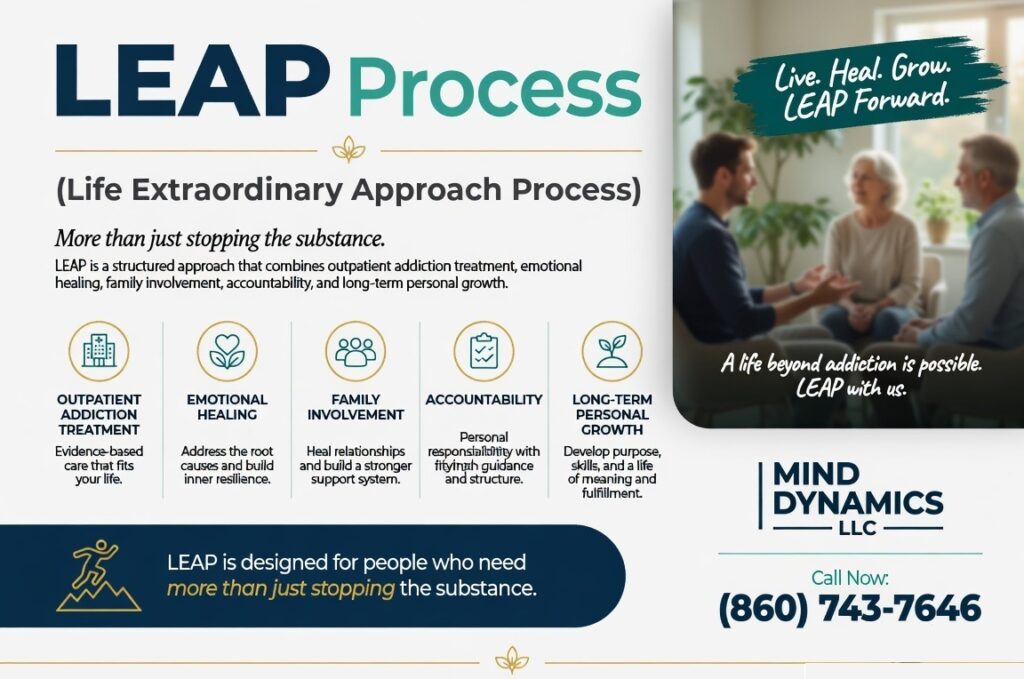
At Mind Dynamics in Plainville, this challenge led to the creation of the LEAP Process (Life Extraordinary Approach Process). LEAP is a structured approach that combines outpatient addiction treatment, emotional healing, family involvement, accountability, and long-term personal growth. It was designed for people who need more than just stopping the substance.
This article explains what LEAP is, why it was developed, who it helps, and how it fits into real outpatient recovery options available across Hartford County, Bristol, Farmington, New Britain, Southington, Newington, West Hartford, and surrounding communities in Connecticut.
What Is the LEAP Process?
The LEAP Process is a structured approach to addiction recovery that treats the whole person, not just the substance use. At Mind Dynamics, LEAP combines evidence-based outpatient treatment with deep emotional work, family involvement, and community connection.
In simple terms, LEAP is designed to help people move from active addiction into a life that feels worth staying sober for. It is not a single therapy or a short program. It is the full continuum of care offered through Partial Hospitalization (PHP), Intensive Outpatient (IOP), traditional outpatient services, family therapy, and ongoing support.
The process recognizes that addiction is rarely just about the substance. It is often about pain, disconnection, unresolved trauma, and patterns that developed over years. When treatment only removes the substance, those underlying drivers remain. LEAP was built to work with both the behavior and the person underneath it.
You can learn more about the overall continuum of care on our addiction treatment Connecticut page.
Why Was LEAP Created?
Our clinical team has observed a pattern that many families in Connecticut also report. People complete detox or a short-term program and feel relief at first. They stop using. They get some structure. Then the emotional patterns that drove the addiction begin to surface again. Anxiety returns. Old relationship conflicts reappear. A sense of emptiness shows up once the substance is no longer filling the space.
This is one of the most common reasons people relapse. Traditional recovery often focuses heavily on stopping the behavior. It does less work on the emotional wounds, family dynamics, and lack of purpose that keep people stuck even after they become sober.
According to national data from SAMHSA, millions of Americans live with substance use disorders each year, yet only a fraction receive treatment that addresses more than the physical dependence. Connecticut continues to face significant challenges related to opioid misuse and alcohol dependence, making comprehensive outpatient recovery options increasingly important.
LEAP was created to address that exact gap. The goal is not only sobriety. The goal is emotional healing after addiction, stronger family relationships, real accountability, and the ability to build a meaningful life. When people feel connected, supported, and purposeful, long-term recovery becomes more sustainable.
Families repeatedly tell us they want more than a temporary break from the crisis. They want a process that helps everyone heal and move forward together.
What Does LEAP Stand For?
LEAP stands for Life Extraordinary Approach Process.
The name reflects the core belief that recovery should lead to something greater than the absence of substances. It is about creating a life that feels extraordinary and sober. The process is built on three progressive levels of care and support:
- Level 1: Sobriety and emotional stability. Building a foundation of abstinence, structure, and early emotional work through PHP, IOP, and outpatient care. This level focuses on getting people physically stable and beginning to identify the emotional patterns that need attention.
- Level 2: Family and relationships. Healing the damage addiction has caused in relationships through family therapy, better communication, and shared accountability. This level is often the most transformative for long-term success.
- Level 3: Community and purpose. Developing leadership, peer coaching, and a sense of belonging that helps people stay engaged in recovery long after formal treatment ends. Purpose and connection are powerful protectors against relapse.
You can read the full description of this continuum on our Our Process page.
Why Traditional Recovery Isn’t Always Enough
Traditional addiction recovery programs often do an excellent job of helping people stop using. They provide medical support during withdrawal, structure during the early days of sobriety, and education about the disease of addiction. These steps are important and sometimes life-saving.
The challenge appears later. Once the physical dependence is managed and the person returns to daily life, many discover that sobriety alone does not automatically create emotional peace or healthy relationships. Old patterns of thinking and relating reappear. Family members may not know how to support recovery without enabling. The person may feel isolated even while living with others.
Research and clinical experience consistently show that relapse is closely tied to unmanaged emotional distress, unresolved trauma, and lack of social support. When these areas remain unaddressed, the risk of returning to substance use rises. This is why relapse prevention must go beyond coping skills for cravings. It must include emotional healing, relationship repair, and a clear sense of purpose.
Many people who complete traditional programs report feeling that something important was missing. They learned how to stay sober in a controlled environment. They did not always learn how to live sober in the real world of work, family, and daily stress. LEAP was built specifically to fill these gaps. It keeps the strong clinical foundation of outpatient addiction treatment while expanding the focus to the areas that most influence long-term success.
In the context of behavioral health Connecticut services, this difference matters. Programs that only address the substance leave people vulnerable once they return home. Programs that also address the emotional and relational environment give people a better chance of sustaining recovery.
Traditional Recovery vs LEAP Process
The table below shows how the two approaches differ in focus and outcomes. This comparison is useful for anyone evaluating addiction counseling Connecticut options or considering an outpatient recovery program.
| Aspect | Traditional Recovery | LEAP Process |
| Primary Focus | Stopping substance use | Building a meaningful life |
| Core Goal | Abstinence | Life Extraordinary and Sober |
| Support System | Mostly individual treatment | Individual, family, and community support |
| Approach to Symptoms | Symptom management | Emotional, relational, and behavioral transformation |
| Time Horizon | Short-term stabilization | Long-term growth and accountability |
| Family Involvement | Often limited or optional | Core part of the process |
| Relapse Prevention | Primarily coping skills | Emotional healing + relationships + purpose |
| Accountability | Limited or temporary | Continuous and shared |
| Treatment Style | Clinical treatment | Clinical + Emotional + Family |
| After Detox Focus | Stabilization | Identity and purpose transformation |
| Counseling Model | Weekly counseling | Community involvement and peer support |
| Crisis Approach | Crisis management | Personal growth and resilience |
| Planning Style | Recovery plan | Life plan |
| Education Focus | Education about addiction | Transformation of patterns |
| End Goal | Recovery as abstinence | Sustainable recovery with purpose |
Who Can Benefit from LEAP?
LEAP is designed for adults who need more than basic detox or short-term counseling. It is especially helpful for people who have tried other programs and still felt something was missing. The process works well across different life situations and substances in communities throughout Central Connecticut.
Veterans
Veterans often carry unique layers of trauma, identity, and family dynamics. LEAP offers structured outpatient care that can be accessed through the VA Community Care Network when eligible. The focus on emotional healing and purpose aligns well with the transition many veterans face after service.
Learn more about our VA Community Care Network services for veterans.
Working Professionals
High-functioning professionals frequently hide their struggles for years. They need treatment that does not require leaving their career. The flexible structure of PHP and IOP within LEAP allows people to continue working while receiving intensive support. Accountability and emotional work help them rebuild integrity without destroying their professional life. For many in this group, the fear of being discovered is as powerful as the addiction itself. An outpatient model reduces that barrier.
Parents and Families
Addiction affects the entire family system. LEAP includes family therapy as a core component rather than an optional add-on. Parents who are in recovery, or family members supporting a loved one, benefit from learning new communication patterns and boundaries.
You can explore the family work in more detail on our family program Connecticut page. Family addiction recovery is not just about supporting the person who is using. It is about healing the patterns that everyone has been living with.
Young Adults
Young adults between 25 and 35 often face family pressure, identity questions, and the stress of early career or independence. LEAP helps them develop emotional skills and a sense of direction that goes beyond simply stopping substance use. The community level of the process is particularly valuable for this age group. Many young adults feel they are failing both themselves and their families. A process that includes purpose and connection can shift that narrative.
People Struggling with Alcohol, Opioids, or Other Substances
LEAP is not limited to one substance. Whether the primary issue is alcohol, opioids, stimulants, or a combination of substances, the process addresses the behavioral and emotional patterns that maintain the addiction. Outpatient detox is available when medically appropriate, followed by stepped care through PHP and IOP. The same principles of emotional healing and family work apply across substances.
How LEAP Fits Into Outpatient Treatment
LEAP is not a separate program that runs alongside treatment. It is the organizing philosophy and structure of the entire continuum of care at Mind Dynamics. Every level of outpatient service is designed to support the goals of LEAP.
Partial Hospitalization Program (PHP)
PHP provides the highest level of structure within an outpatient setting. People attend treatment during the day and return home in the evenings. This intensity supports early emotional stabilization and the beginning of accountability work.
Learn more about our Partial Hospitalization Program in Connecticut. PHP is often the right starting point for people who need significant daily support but do not require residential care.
Intensive Outpatient Program (IOP)
IOP offers a step-down level of care that still provides significant structure while allowing more flexibility for work or family responsibilities. Many people move from PHP into IOP as they gain stability.
Details are available on our Intensive Outpatient Program Connecticut page. IOP is a critical bridge between intensive treatment and independent living.
Outpatient Detox and Ambulatory Withdrawal Management
When medical supervision is needed to manage withdrawal safely, Ambulatory Withdrawal Management allows people to detox while living at home. This service is often the entry point into the LEAP continuum.
More information is available on our Ambulatory Withdrawal Management page. Safe detox is the foundation. What comes after detox determines whether recovery lasts.
Family Therapy and Medication Management
Family therapy is integrated throughout the process rather than treated as an afterthought. Medication management is available when clinically appropriate to support mental health and reduce cravings. Both services strengthen the foundation needed for emotional healing and relapse prevention. In an outpatient recovery program, these elements work together rather than in isolation.
Is LEAP Right for You? A Simple Decision Path
Use the following path to reflect on whether the LEAP approach may fit your situation:
Are you trying to stop using substances or stay sober?
↓ Yes
Do you still struggle emotionally even after becoming sober?
↓ Yes
Have relationships been damaged by addiction, or do you need family support?
↓ Yes
Are you looking for more than short-term stabilization?
↓ Yes
LEAP may help address emotional healing, relationships, accountability, and purpose within an outpatient recovery program.
This is not a clinical assessment. It is simply a way to notice whether the goals of LEAP match the challenges you are facing. Many people in Connecticut who answer yes to these questions find that traditional programs left them wanting more depth.
Frequently Asked Questions About the LEAP Process
What makes LEAP different from other addiction recovery programs?
Most programs focus primarily on stopping substance use. LEAP keeps that foundation but expands the work to include emotional healing, family systems repair, and the development of purpose and accountability. The goal is a life that feels meaningful, not just the absence of substances.
Why do people relapse after rehab?
Many relapses occur after detox or short-term treatment not because detox failed, but because emotional healing never happened. Unresolved anxiety, trauma, relationship conflict, and lack of purpose leave people vulnerable once the structure of treatment is gone.
Read: Why People Relapse After Detox (And How to Prevent It)
Does emotional healing happen after detox?
It can, but only if the program intentionally addresses it. Detox manages the physical withdrawal. Emotional healing requires ongoing therapy, family work, and support that helps people face what the substance was covering.
What happens after outpatient detox?
After outpatient detox, the most important step is moving into a structured continuum of care. At Mind Dynamics, that usually means stepping into PHP or IOP so the emotional and relational work can begin while the person is still supported.
Can you rebuild family relationships after addiction?
Yes. Family therapy is a core part of Level 2 in the LEAP Process. Families learn new communication patterns, set healthier boundaries, and begin repairing trust. Healing the family system is one of the strongest predictors of long-term recovery.
What is the difference between sobriety and recovery?
Sobriety means the person has stopped using the substance. Recovery means the person is also healing emotionally, repairing relationships, building accountability, and creating a life that feels worth staying sober for. LEAP focuses on recovery, not just sobriety.
Can outpatient treatment prevent relapse?
Outpatient treatment can significantly reduce relapse risk when it includes emotional healing, family involvement, and ongoing accountability. Programs that only focus on stopping the substance leave people more vulnerable once they return to daily life.
Is LEAP part of PHP and IOP?
Yes. PHP and IOP at Mind Dynamics are delivered within the LEAP framework. The clinical structure of these programs supports the emotional and relational goals of the process.
How long does the LEAP Process take?
There is no fixed timeline. Some people move through the more intensive levels of care over several weeks or months. The community and accountability elements can continue much longer. The length of treatment is based on individual needs and clinical recommendations.
Key Concepts Connected to the LEAP Process
The LEAP Process is intentionally connected to the following areas of addiction recovery and behavioral health:
- Substance Use Disorder and Addiction Recovery
- Emotional Healing and Emotional Regulation
- Family Systems Therapy and family addiction recovery
- Accountability in recovery
- Purpose and Recovery Capital
- Outpatient Treatment, Partial Hospitalization Program, and Intensive Outpatient Program
- Ambulatory Withdrawal Management and Outpatient Detox
- Trauma-informed Care
- Behavioral Health and Mental Health support
- Veterans Recovery through the VA Community Care Network
- Local care in Connecticut, including Plainville, Hartford County, Bristol, Farmington, New Britain, Southington, Newington, and West Hartford
Taking the Next Step
Understanding the LEAP Process is the first step. The next step is deciding whether this approach matches what you or your loved one actually needs.
If you have tried other forms of substance abuse treatment in Connecticut and still feel stuck, or if you are looking for outpatient addiction treatment that includes family work and emotional healing, LEAP may be worth exploring.
You can learn more about the full range of services on the Mind Dynamics homepage or call directly to speak with someone who understands the process.
At Mind Dynamics, we believe recovery should be more than simply avoiding substances. It should be about creating a life so connected, purposeful, and fulfilling that returning to addiction no longer feels like the answer.
That is the foundation of the LEAP Process, and the future we hope every individual and family can build.
Call Mind Dynamics LLC at (860) 743-7646 to ask questions, verify insurance, or schedule an assessment. We serve individuals and families across Connecticut who are ready for a different approach to addiction recovery.