
Getting sober is a major achievement. For many people, it is the hardest step they have ever taken. Yet after the substance is gone, a different struggle often begins. You may feel anxious, flat, restless, lonely, or simply not like yourself. You may wonder why life still feels so difficult when the drinking or using has stopped.
This experience is more common than most people realize. Sobriety removes the substance, but it does not automatically repair the emotional patterns, relationships, routines, or sense of self that developed around it. Understanding why recovery can feel hard is often the first step toward building something more stable.
This article explains why many people still struggle after getting sober, what those struggles often mean, and what can help people move beyond simply staying sober.
Why Can Recovery Feel Hard Even When You’re Sober?
Addiction often becomes a way of managing feelings, stress, boredom, pain, or emptiness. When the substance is removed, those underlying experiences do not disappear. In many cases they become more noticeable.
At the same time, the brain and body are adjusting. Sleep, mood, energy, and concentration can remain disrupted for weeks or months. Relationships may feel strained. Daily life may lack structure or meaning. The result is that many people feel sober but not well.
This does not mean recovery is failing. It often means the next phase of work is beginning. Stopping use creates the foundation. Learning how to live without relying on substances is the larger task.
Many people expect sobriety to feel like relief. Sometimes it does. Often it feels more complicated. The absence of the substance can expose problems that were previously covered over. That exposure can be uncomfortable, but it is also useful information.
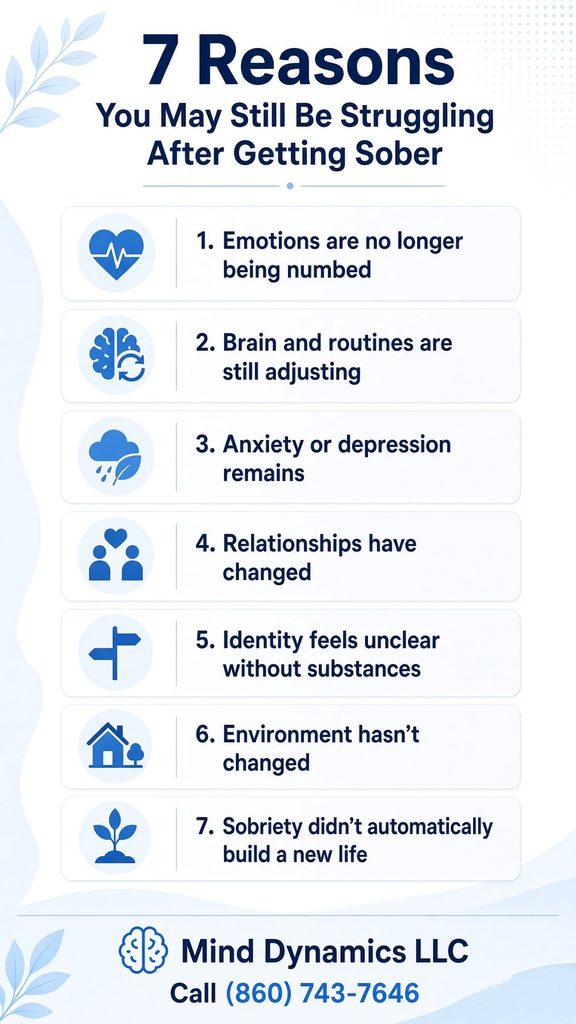
7 Reasons You May Still Be Struggling After Getting Sober
Below are seven common reasons people continue to struggle after they stop using substances. These reasons often overlap, and more than one may be present at the same time.
1. Emotions are no longer being numbed
Substances often dull emotional intensity. When they are gone, feelings can return with more force. Sadness, anger, fear, shame, or emptiness that were previously muted can feel overwhelming.
This increase in emotional intensity can surprise people who expected sobriety to feel calmer. In reality, early recovery often involves learning how to experience and regulate emotions without the previous coping method. That learning curve is real and can feel exhausting.
2. Your brain and routines are adjusting
The brain adapts to regular substance use. After stopping, systems related to pleasure, motivation, sleep, and stress response need time to rebalance. This adjustment period can include low mood, irritability, restlessness, or difficulty concentrating.
These changes are temporary for many people, but they can last longer than expected. During this period, daily life may feel harder even when the person is fully committed to recovery. Understanding that the brain is still recalibrating can reduce the sense that something is uniquely wrong.
3. Anxiety or depression remains
Some people used substances to manage anxiety or depression. Others develop or notice these symptoms more clearly after becoming sober. When mental health symptoms remain untreated, recovery can feel unstable even if the person is no longer using.
Anxiety and depression can also intensify temporarily as the nervous system adjusts. Persistent symptoms, however, deserve attention. Ignoring them often leaves people more vulnerable to relapse or prolonged emotional struggle.
4. Relationships have changed
Addiction often damages trust, communication, and connection. Even after someone becomes sober, family members and partners may still feel hurt, cautious, or exhausted. Rebuilding relationships takes time and often requires support on both sides.
Some relationships improve with sobriety. Others reveal deeper problems that were previously obscured. Either way, the relational landscape of recovery is often more complicated than people expect.
Family involvement can be an important part of this process. You can learn more about our family program in Connecticut.
5. You don’t know who you are without substances
For some people, substance use became tightly connected to identity, social life, stress management, or daily structure. When that pattern ends, a person may feel unsure of who they are or how to fill the space that substances once occupied.
This identity gap is uncomfortable but also creates room for healthier growth. The question shifts from how do I stop using to how do I build a life that feels coherent without relying on substances. That question takes time to answer.
6. Your environment hasn’t changed
If the same stressors, people, routines, or triggers remain in place, staying sober can feel like swimming against a strong current. Environment does not determine everything, but it strongly influences how hard recovery feels day to day.
A high-stress job, an unstable living situation, or ongoing conflict at home can keep the nervous system activated even when a person is no longer using. Addressing environmental pressure is often part of making recovery more sustainable.
7. Sobriety removed the substance but didn’t automatically build a new life
Stopping use is essential. Building a life that feels meaningful, connected, and sustainable is a different task. Without purpose, support, and new skills, many people feel stuck in a state of sober survival rather than genuine recovery.
This is one of the most important distinctions in long-term recovery. Abstinence creates the possibility of change. It does not complete the change by itself.
Is Something Wrong If I Don’t Feel Happy in Recovery?
No. Not feeling happy after getting sober does not mean you have failed or that recovery is not working. Many people expect relief or clarity to arrive quickly. In reality, early recovery often involves emotional discomfort, uncertainty, and adjustment.
Feeling flat, anxious, irritable, or empty can be part of the process while the brain and nervous system stabilize and while new coping patterns develop. The important question is not whether every day feels good. The important question is whether you are building support, skills, and structure that make long-term recovery more sustainable.
If emotional pain remains intense, persistent, or overwhelming, that is useful information. It may indicate the need for additional clinical support rather than a sign that sobriety itself was a mistake.
Many people benefit from hearing this directly: struggle after sobriety is common. It does not erase the progress of getting sober. It points toward the next layer of work.
When Emotional Struggles Become a Relapse Risk
Emotional struggle alone does not mean relapse is inevitable. However, certain patterns increase risk:
– Growing isolation
– Returning to high-risk environments without a plan
– Using old coping patterns under stress
– Ignoring anxiety, depression, or trauma symptoms
– Believing that feeling bad means recovery is not working
– Losing structure and support too quickly
When emotional pain is left unaddressed, some people eventually return to substances as a familiar form of relief. This is one reason recovery support needs to go beyond abstinence alone.
Recognizing these patterns early makes it easier to respond with support rather than shame. The goal is not to avoid all discomfort. The goal is to prevent discomfort from becoming the reason someone returns to use.
If you want to understand this pattern more clearly, you can read our article on why people relapse after detox.
You may also find it helpful to explore emotional healing after addiction.
What Helps People Move Beyond Simply Staying Sober?
Staying sober is necessary. Building a life that supports sobriety is what helps many people stay well over time. Helpful elements often include:
– Learning how to regulate emotions without substances
– Addressing anxiety, depression, or trauma when present
– Repairing or restructuring relationships
– Creating routines that support stability
– Building purpose and accountability
– Receiving structured support when needed
For some people, this work happens through therapy and community support. For others, a more structured level of care such as Intensive Outpatient or Partial Hospitalization becomes necessary when emotional or behavioral struggles remain intense.
At Mind Dynamics, this broader approach is reflected in the LEAP Process, which focuses on emotional healing, relationships, accountability, and building a meaningful life beyond substance use.
The goal is not only to stop using. The goal is to help people create a life that feels worth protecting. That shift from survival to meaningful recovery is often what makes sobriety sustainable.
Finding Support in Connecticut
If you are sober but still struggling, you are not alone in this experience. Many people across Connecticut reach a point where abstinence alone is not enough and additional support becomes necessary.
Mind Dynamics is based in Plainville and works with individuals and families from Hartford, Bristol, Farmington, New Britain, West Hartford, Southington, and surrounding Central Connecticut communities.
Depending on what you are facing, support may include outpatient therapy, Intensive Outpatient Programming, Partial Hospitalization, family involvement, or focused work on emotional recovery. The right level of care depends on how intense the struggle is and how much structure you currently need.
You can explore treatment options on our Addiction Treatment in Connecticut page.
If family dynamics are part of what feels difficult, our family program in Connecticut may also be relevant.
If you are unsure where to start, a conversation with a clinical team can help clarify the next step.
You can call us at (860) 743-7646.
Frequently Asked Questions
Why do I feel worse after getting sober?
Many people feel more emotional intensity after stopping substances because the numbing effect is gone and the brain is still adjusting. This can include anxiety, low mood, irritability, or restlessness.
Is it normal to feel depressed after getting sober?
Yes, it is common. Depression or low mood can appear or become more noticeable in early recovery. Persistent symptoms deserve clinical attention.
Why am I still anxious after quitting alcohol or drugs?
Anxiety often becomes more visible once substances are no longer used to manage it. Ongoing anxiety is a signal that additional support may be needed.
Does struggling after sobriety mean treatment failed?
No. It often means the next phase of recovery work is beginning. Sobriety removes the substance. Emotional and relational healing usually take longer.
When should I get more help?
If emotional pain is intense, persistent, interfering with daily life, or increasing relapse risk, it is reasonable to seek additional support.
Can outpatient treatment help if I am already sober?
Yes. Many people enter outpatient care after becoming sober because they need help with emotional regulation, mental health symptoms, relationships, or structure.
How does family involvement help?
Family support can improve communication, reduce conflict, and create a more stable recovery environment when it is handled thoughtfully.
Is it possible to feel stuck even after months of sobriety?
Yes. Some people remain sober for a long time and still feel emotionally flat, disconnected, or directionless. That experience often points toward the need for deeper emotional and relational work.
Taking the Next Step
Struggling after getting sober does not mean you have failed. It often means the deeper work of recovery is becoming visible. Emotions, relationships, identity, and daily structure all take time to rebuild.
If you are sober but still feel stuck, anxious, depressed, or disconnected, support is available. You do not have to figure out the next step alone.
Call Mind Dynamics at (860) 743-7646 to talk about what you are experiencing and what kind of support may help.